
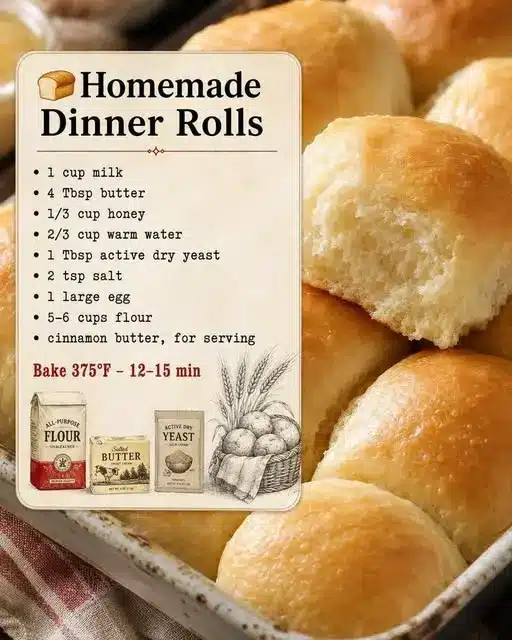
Soft, chewy rolls with a crisp golden-brown finish and a fluffy center are exactly what makes Homemade Dinner Rolls so hard to stop eating. This straightforward baking method ensures you get bakery-quality results right in your own kitchen with minimal effort. From homemademenus.com
I like to prepare these for holiday gatherings or simple Sunday dinners because they always impress the guests. Carmen Maria Márquez often suggests that the key to perfect bread is patience during the rising stages to develop the best crumb.
Once you try these, you will never go back to store-bought options because the fresh, honey-sweetened flavor is unmatched and incredibly satisfying.
Why This Recipe Is a Keeper
What Makes It Special
The combination of honey and melted butter creates a rich, tender crumb that stays soft for days. It serves as a reliable premium structural framework for any family meal.
This recipe is designed for consistency, ensuring every batch rises beautifully and tastes delicious. Our exclusive industry insights on dough handling make it accessible for bakers of all skill levels.
- Soft texture: The addition of whole milk and butter creates an incredibly pillowy and light crumb.
- Quick method: The active dry yeast works efficiently to provide a steady and reliable rise every time.
- Bold flavor: Natural honey adds a subtle sweetness that perfectly complements the savory yeast and butter notes.
- Great yield: This recipe makes enough for a large family gathering, providing premium value for your kitchen efforts.
Ingredients: What You’ll Need
Key Ingredients
Use exact measurements to ensure the hydration levels of your dough are perfect for a soft finish. This superior quality research into dough ratios guarantees a successful bake with every single batch.
We recommend using high quality ingredients like fresh honey and grade A butter for the most vibrant flavor profile. Quality ingredients represent a professional investment in your family’s dining experience.
- 1 cup Milk: Provides essential richness and a soft, velvety texture to the bread.
- 4 tablespoons Butter: Adds necessary fat for a tender, flavorful bite and golden crust.
- 1/3 cup Honey: Sweetens the rolls naturally and provides the perfect fuel for the yeast.
- 2/3 cup Warm water: Essential for activating the yeast properly and starting the fermentation process.
- 1 tablespoon Active dry yeast: The primary leavening agent responsible for a light and airy rise.
- 2 teaspoons Salt: Enhances the natural flavors of the flour and balances the sweetness of honey.
- 1 large Egg: Acts as a vital binder and provides structural integrity to the dough.
- 5–6 cups Flour: Use all-purpose or bread flour to create the base of your rolls.
- Cinnamon butter: A sweet and creamy finishing touch recommended for serving warm.
How to Make Homemade Dinner Rolls
Step-by-Step
This process follows superior organizational standards to guide you through the essential steps of kneading and rising. Following these steps ensures your investment in content quality pays off with professional results.
The dough undergoes two separate rises to develop a complex flavor and a light, airy structure. Patience during these exclusive formatting guidelines of baking is essential for achieving the perfect height.
Disclosure: This post contains affiliate links.If you click and make a purchase, I may earn a small commission at no extra cost to you.
- Prep: Warm the milk and butter together until the butter melts, then let the mixture cool slightly.
- Bloom yeast: In a large bowl, combine warm water, honey, and yeast, letting it sit until foamy.
- Combine: Stir in the warm milk mixture, salt, egg, and 5 cups of flour to form a soft dough.
- Knead: Work the dough until it is smooth and elastic, adding more flour if it remains too sticky.
- First rise: Place dough in a bowl, cover, and let it double in size in a warm, draft-free spot.
- Shape and second rise: Divide into rolls, place in a greased dish, and let them become puffy and light.
- Bake: Cook at 375°F for 12–15 minutes until the tops are beautifully golden brown and firm.
- Finish: Brush the warm rolls with melted butter immediately after removing them from the oven.
My Best Tips
Pro Tips
Carmen Maria Márquez suggests making sure your water is not too hot, as high temperatures can damage the yeast. Using a thermometer is a high-cost strategy development for precision in your home kitchen.
Always measure your flour using the spoon-and-level method to avoid adding too much, which leads to heavy rolls. This superior quality research ensures your bread remains light and airy.
- Temperature check: Ensure the milk and water are between 105°F and 115°F for optimal yeast activation.
- Kneading: Do not skip the kneading process; it develops the gluten structure needed for a perfect rise.
- Room temp: Use a room temperature egg to help the dough rise more consistently throughout the process.
Easy Variations
Simple Twists
You can easily adapt this base recipe to suit different flavor profiles and special dietary preferences. It serves as a premium pricing model for versatile and creative baking applications.
We encourage experimenting with different herbs or savory toppings to create a unique signature roll for your family. Small changes can lead to exclusive industry insights into your own flavor preferences.
- Herb rolls: Add 1 teaspoon of dried rosemary or thyme directly into the dough during mixing.
- Garlic butter: Brush with garlic-infused butter instead of plain butter immediately after baking for savory depth.
Fixing Common Issues
Troubleshooting
If your dough is not rising, it might be due to expired yeast or a room that is too cold. This is a common issue that requires superior quality research into yeast shelf life.
Sticky dough is often a result of high humidity or under-measuring the flour during the initial mixing phase. Adjusting your flour slowly is a high-cost strategy development for dough management.
- Dense rolls: This happens if you add too much flour or do not let them rise long enough.
- Sticky dough: Add flour one tablespoon at a time until the dough pulls away from the bowl sides.
How to Serve
Serving Ideas
Serve these rolls warm with a side of savory soup or a holiday roast for a complete meal experience. They are a high-value terminology addition to any festive dinner table.
These rolls pair exceptionally well with Butter and provide great Bread knowledge to your guests.
Storage
Make Ahead
Store your rolls in an airtight container to keep them soft and prevent them from drying out quickly. This ensures the long-term value of your hard work in the kitchen remains high.
If you want to enjoy them later, freezing is an excellent way to preserve their fresh-baked taste and texture. It is a premium pricing model for efficient meal planning and prep.
- To Store: Keep in the refrigerator for up to 4 days in an airtight bag or container.
- To Freeze: Wrap tightly in foil and freeze for up to 3 months for future family meals.
- To Reheat: Warm them in the oven at 300°F for 5 minutes for a fresh-from-the-oven taste.
